Lean Manufacturing for Chemical Industries Training Course
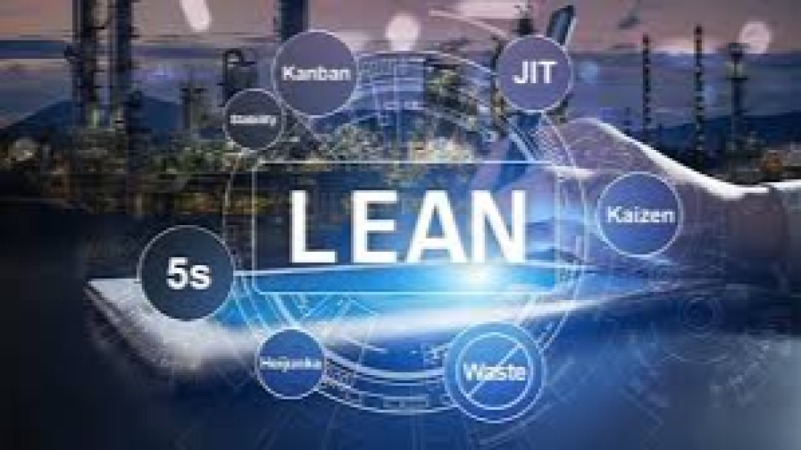
Lean Manufacturing for Chemical Industries Training Course provides a proven framework that enables chemical industries to streamline operations, reduce variability, minimize non-value-added activities, and improve overall productivity while maintaining strict safety and environmental standards.
Course Overview
Lean Manufacturing for Chemical Industries Training Course
Introduction
The chemical manufacturing sector is undergoing rapid transformation driven by Industry 4.0, Operational Excellence, Sustainability, Digital Manufacturing, Process Optimization, ESG Compliance, Smart Factory Initiatives, and Cost Reduction Strategies. Organizations are increasingly focusing on eliminating waste, improving process reliability, enhancing product quality, and maximizing asset utilization to remain competitive in global markets. Lean Manufacturing for Chemical Industries Training Course provides a proven framework that enables chemical industries to streamline operations, reduce variability, minimize non-value-added activities, and improve overall productivity while maintaining strict safety and environmental standards.
This comprehensive training program equips participants with advanced knowledge and practical tools to implement Lean Transformation, Continuous Improvement, Six Sigma Integration, Value Stream Mapping, Kaizen, Total Productive Maintenance (TPM), Root Cause Analysis, Digital Process Excellence, Operational Agility, and Sustainable Manufacturing Practices. Through real-world chemical industry case studies, hands-on exercises, and implementation roadmaps, participants will learn how to achieve measurable improvements in efficiency, quality, safety, compliance, and profitability.
Course Duration
5 days
Course Objectives
Upon completion of this training, participants will be able to:
- Understand Lean Manufacturing Principles and their application in chemical processing industries.
- Identify and eliminate Process Waste (Muda) across manufacturing operations.
- Apply Value Stream Mapping (VSM) to improve production flow and reduce bottlenecks.
- Implement Continuous Improvement (Kaizen) initiatives for operational excellence.
- Optimize Overall Equipment Effectiveness (OEE) and asset performance.
- Integrate Digital Transformation and Industry 4.0 Technologies into lean initiatives.
- Improve Process Safety Management (PSM) through lean methodologies.
- Conduct effective Root Cause Analysis (RCA) using structured problem-solving tools.
- Implement Total Productive Maintenance (TPM) for equipment reliability.
- Enhance Quality Management Systems (QMS) and reduce process variability.
- Develop Sustainable Manufacturing and ESG-Aligned Operations.
- Improve inventory management through Just-in-Time (JIT) and Lean Supply Chain practices.
- Design and execute a comprehensive Lean Transformation Roadmap for chemical facilities.
Target Audience
- Plant Managers
- Production Managers
- Chemical Engineers
- Process Engineers
- Operations Supervisors
- Quality Assurance and Quality Control Professionals
- Maintenance and Reliability Engineers
- Continuous Improvement and Operational Excellence Teams
Course Modules
Module 1: Fundamentals of Lean Manufacturing in Chemical Industries
- Lean principles and philosophy
- Evolution of operational excellence
- Waste identification in chemical plants
- Lean culture and leadership
- Lean maturity assessment
- Case Study: Lean transformation in a specialty chemicals manufacturing facility.
Module 2: Value Stream Mapping and Process Flow Optimization
- Current-state value stream mapping
- Future-state process design
- Bottleneck identification
- Cycle time reduction techniques
- Workflow standardization
- Case Study: Production flow optimization in a petrochemical processing plant.
Module 3: Waste Elimination and Continuous Improvement
- Seven wastes in chemical manufacturing
- Kaizen implementation strategies
- Visual management systems
- Gemba walk practices
- Performance improvement tracking
- Case Study: Waste reduction initiative in a batch processing operation.
Module 4: Total Productive Maintenance (TPM) and Equipment Reliability
- TPM pillars and implementation
- Autonomous maintenance
- Predictive maintenance technologies
- Reliability-centered maintenance
- OEE measurement and improvement
- Case Study: Reliability enhancement in a chemical blending facility.
Module 5: Lean Quality Management and Six Sigma Integration
- Lean Six Sigma fundamentals
- DMAIC methodology
- Statistical process control
- Defect reduction strategies
- Process capability analysis
- Case Study: Quality improvement project in chemical formulation manufacturing.
Module 6: Lean Safety, Risk Management, and Compliance
- Process safety integration
- Hazard identification techniques
- Risk-based decision making
- Regulatory compliance management
- Incident investigation methods
- Case Study: Process safety improvement in a hazardous chemical production unit.
Module 7: Digital Lean Manufacturing and Industry 4.0
- Smart manufacturing concepts
- Industrial IoT applications
- Real-time performance monitoring
- Data analytics for lean operations
- Digital dashboards and KPIs
- Case Study: Industry 4.0 implementation in a chemical processing facility.
Module 8: Lean Supply Chain and Sustainable Manufacturing
- Lean inventory management
- Just-in-Time (JIT) systems
- Supplier collaboration strategies
- Sustainability and ESG integration
- Lean transformation roadmap development
- Case Study: Sustainable supply chain optimization in a global chemical company.
Training Methodology
This course employs a participatory and hands-on approach to ensure practical learning, including:
- Interactive lectures and presentations.
- Group discussions and brainstorming sessions.
- Hands-on exercises using real-world datasets.
- Role-playing and scenario-based simulations.
- Analysis of case studies to bridge theory and practice.
- Peer-to-peer learning and networking.
- Expert-led Q&A sessions.
- Continuous feedback and personalized guidance.
Register as a group from 3 participants for a Discount
Send us an email: info@datastatresearch.org or call +254724527104
Certification
Upon successful completion of this training, participants will be issued with a globally- recognized certificate.
Tailor-Made Course
We also offer tailor-made courses based on your needs.
Key Notes
a. The participant must be conversant with English.
b. Upon completion of training the participant will be issued with an Authorized Training Certificate
c. Course duration is flexible and the contents can be modified to fit any number of days.
d. The course fee includes facilitation training materials, 2 coffee breaks, buffet lunch and A Certificate upon successful completion of Training.
e. One-year post-training support Consultation and Coaching provided after the course.
f. Payment should be done at least a week before commence of the training, to DATASTAT CONSULTANCY LTD account, as indicated in the invoice so as to enable us prepare better for you.